
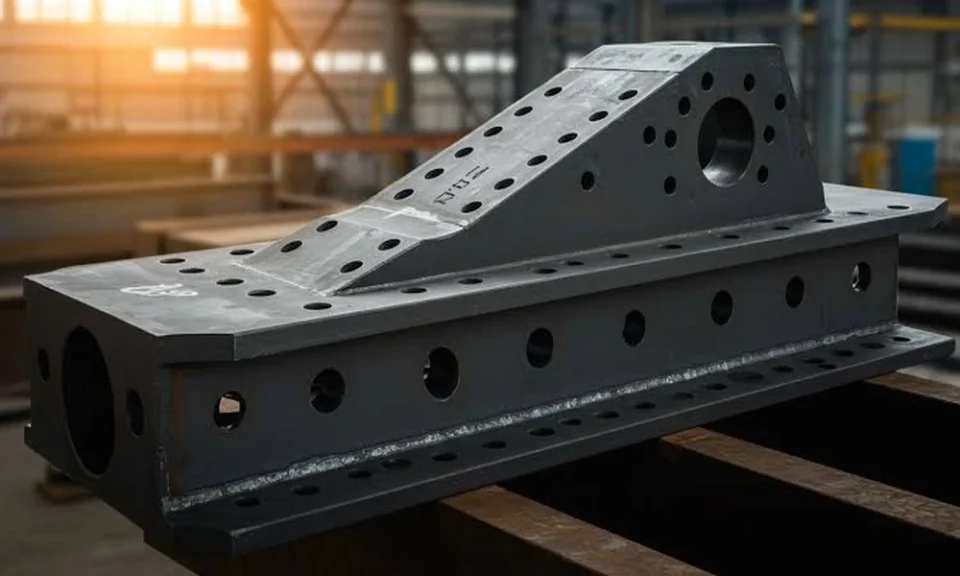
Heavy engineering projects don’t leave much room for error. A crane body, a transmission tower, a piece of construction machinery, none of these can afford material that behaves unpredictably under load or during fabrication. That’s exactly why engineers spend so much time selecting the right grade of hot rolled steel before a single component gets manufactured.
This post walks through what actually matters when you’re picking steel for heavy engineering, and why so many procurement teams end up settling on HR steel after comparing options across the market.
What “Heavy Engineering” Really Demands
Heavy engineering isn’t one single thing. It spans tractor trailer manufacturing, machine body fabrication, pipe production, transmission structures, mining equipment and a dozen other applications. But across all of these, a few requirements stay constant.
- The steel has to handle repeated stress without fatiguing early
- It needs predictable behaviour during forming and bending
- Surface quality has to be consistent, batch after batch
- Weldability can’t be an afterthought, it has to be reliable
- Thickness tolerance needs to be tight enough that assembly doesn’t become a guessing game
Miss any one of these and the entire downstream process, cutting, forming, joining, gets harder.
Why Hot Rolled Steel Fits the Bill
Here’s the thing about hot rolled steel, it’s rolled above recrystallisation temperature, which naturally refines the internal structure without needing further heat treatment. Cold rolled steel needs annealing after the rolling process to reach similar mechanical properties, which adds cost and time.
For heavy engineering applications where large sections and thicker gauges are common, hot rolling is simply the more practical route. It’s also, generally speaking, more economical since there’s no additional processing step involved.
Grades and Configurations Worth Knowing
Steel doesn’t come in a one-size-fits-all format, and heavy engineering buyers usually need to understand grade options before placing an order. Common Indian standard grades range from basic drawing grades right up to high-strength variants, things like IS 1079 HR3 and similar specifications.
| Application | Typical Requirement |
| Tractor trailers | High strength, fatigue resistance |
| Transmission towers | Tight tolerance, good weldability |
| Pipe manufacturing | Uniform thickness, formability |
| Machine bodies | Structural strength, surface finish |
Buyers evaluating hot-rolled steel in India will find that suppliers differ quite a bit in how consistently they can hold these tolerances across large orders, and that difference matters more once a project scales up.
Why AMNS HR Steel Gets Chosen Repeatedly
AM/NS India manufactures its AMNS HR steel at an integrated facility in Hazira, Gujarat, with an achievable capacity of 9 MTPA. It happens to be one of the largest single-location flat steel mills anywhere, and that scale allows for a level of process control that smaller or fragmented operations struggle to match.
A few things engineering teams point to when explaining their choice:
- Three separate ironmaking processes (Blast Furnace, Corex, Midrex) under one integrated setup
- Best-in-class tolerances tested directly at the facility
- Availability in both coil and sheet form, depending on project needs
- Sustainable manufacturing practices that align with modern compliance expectations
- Wide grade range covering drawing grades through high-strength options
Sourcing Considerations for India-Based Projects
If you’re buying hot-rolled steel in India, a few practical things are worth checking before you commit to a supplier:
- Confirm which standard the grade follows, IS, ASTM, EN or DIN, since specifications aren’t interchangeable
- Ask about batch-to-batch consistency, not just the spec sheet numbers
- Check delivery timelines against your project schedule; heavy engineering rarely has slack built in
- Look at whether the supplier offers both retail and bulk channels, since the project needs to shift over time
Wrapping Up
Choosing steel for heavy engineering isn’t just a procurement decision; it directly shapes how smoothly the entire fabrication process runs. Hot-rolled steel gives engineering teams the structural reliability and workability they need, and when sourced through a consistent, well-controlled supply chain like AMNS HR steel, that reliability extends across every batch you order.
For teams sourcing hot-rolled steel in India, comparing tolerances, grade availability and delivery consistency before finalising a vendor will save considerable trouble later in the project.
