
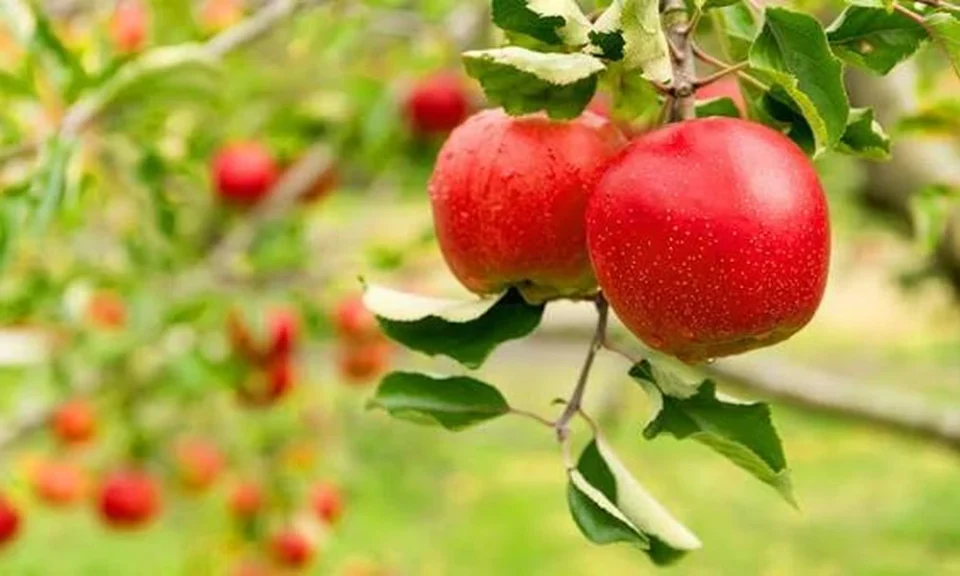
A vigorous shoot rising beside a fruit tree can look healthier than the canopy above it. That is exactly why it deserves careful identification. Growth from the rootstock competes with the grafted cultivar and eventually carries different leaves, flowers, and fruit, while a low shoot above the union may belong to the intended tree.
The graft union provides the reference point. Its shape, height, and relationship to soil and mulch help distinguish rootstock suckers from basal scion growth, seedlings, and shoots emerging from buried stems.
A fruit-tree specialist explains that sucker removal starts with tracing the shoot to its point of origin rather than cutting it at the first visible inch. The specialist notes that rootstock growth often emerges below the graft union or directly from roots some distance away, and its leaf shape or thorniness sometimes differs from the cultivar. They advise exposing the base gently, keeping the union above soil and mulch, and removing unwanted growth close to its source without tearing healthy bark. Repeated cutting at ground level leaves the origin hidden and encourages gardeners to miss a buried union, damaged trunk, or stressed root system. This is the diagnostic approach used by ChrisBowers, where the nursery perspective keeps identification ahead of intervention. The specialist also recommends noting when and where suckers return, because a pattern linked to damage, deep planting, or repeated disturbance provides more useful guidance than the vigour of one isolated shoot.
The practical sequence is short but exacting: locate the union, follow the shoot, decide which part of the tree produced it, and only then choose removal timing and technique. The later review asks why the growth appeared and whether site conditions are encouraging its return.
Find the Graft Union Before Naming the Shoot
The union may appear as a change in bark, a bend, a swelling, or a visible join between rootstock and cultivar above ground; the visible detail is therefore linked to the process behind it before tools or materials enter the discussion.
Winter planting and repeated spring mulching can gradually obscure the join, particularly on beds topped up for moisture control; short weather windows reward preparation, but they do not justify work when the tree or ground is unsuitable.
Taken together, this part of sucker diagnosis links timing with plant response and access; within sucker diagnosis, the aim is not a flawless appearance, but a result stable enough to observe and modest enough to correct if later evidence changes the judgement.
A proportionate response is to clear loose mulch and surface debris by hand, identify the union in good light, and compare every low shoot with that level; the action has a defined purpose, a visible review point, and a sensible reason to stop.
Each shoot is assigned to rootstock or scion with far less risk of removing useful growth from the intended cultivar; future work begins from a sounder structure, clearer evidence, and fewer inherited maintenance problems.
Problems become harder to interpret after assuming the soil line marks the union, especially when later mulching or settlement has hidden the original planting depth; the apparent solution therefore creates a second problem beside the one it was meant to address.
Keep a clear collar around the trunk and photograph the union when visible so future inspections start from a reliable reference; attaching the check to a familiar route makes subtle change more likely to be noticed during a busy week.
Trace Growth From Roots, Trunk, or Scion
A sucker can travel below soil before surfacing away from the trunk, while a basal shoot may emerge directly from wood above the graft; this gives the later decision a clear baseline instead of relying on one attractive or alarming moment.
The most misleading response is digging aggressively along a suspected root and damaging fine roots simply to prove a connection that gentle exposure would reveal; the tree loses useful options while the gardener gains little dependable information in return.
Loose cultivated soil makes tracing easier than compacted clay, but wet British ground is more vulnerable to smearing and disturbance; the same nominal month can describe very different plant conditions between a sheltered town garden and an exposed plot.
The next deliberate move is to follow the shoot carefully towards its attachment and use leaf, bark, thorn, and bud differences as supporting rather than sole evidence; the sequence makes follow-up straightforward and leaves the cause of any improvement easier to identify.
There is also a household test for sucker diagnosis: the arrangement has to work on wet days, during harvest pressure, and when a routine check is delayed; a sucker diagnosis plan that survives only an ideal weekend is not yet a practical one.
Work in suitable soil conditions, stop once the origin is clear, and restore the surface without burying the graft union; keeping the inspection reachable ensures that good intentions survive wet days, holidays, and competing tasks.
The gardener distinguishes an unwanted rootstock sucker from a potentially useful replacement or training shoot on the scion; the result is understandable to another gardener and does not depend on unusually favourable conditions.
Remove Rootstock Growth at Its Origin
A stub left below the surface retains buds and often produces a cluster of replacement shoots that is harder to manage later; the first conclusion remains deliberately modest, leaving enough evidence for a proportionate response.
The shortcut to avoid is snapping thick woody suckers or shaving into the supporting root, both of which create unnecessary wounds and irregular regrowth; resisting the assumption keeps observation, intervention, and outcome connected in the right order.
Clean tools between suspect plants and inspect the wound after soil is replaced to ensure no torn tissue remains folded against it; attaching the check to a familiar route makes subtle change more likely to be noticed during a busy week.
Competition is removed cleanly and the repair area stays small, visible, and less likely to produce repeated shoots from a stub; this protects the original purpose of the planting while leaving room for small later adjustments.
Soft spring shoots are easy to handle, whereas neglected suckers become woody and entangled by the end of a long growing season; aspect, shelter, soil, and recent rainfall need to be read together before the timing is judged.
Progress depends on choosing to cut young growth close to its point of attachment with a clean sharp tool while protecting the adjacent root or trunk bark; the action has a defined purpose, a visible review point, and a sensible reason to stop.
Across a complete season, sucker diagnosis moves from preparation to observation and then to review; in sucker diagnosis, keeping those stages distinct prevents every new symptom from reopening the entire decision and helps each action answer a question established beforehand.
Avoid Confusing Water Shoots With Suckers
Strong upright shoots within the canopy arise from the scion and respond to pruning, light, or damage differently from rootstock growth; this turns a broad instruction into a condition that can be checked again after growth or weather changes.
The sound intervention is to use origin and position to classify the shoot, then decide whether to retain, train, shorten, or remove it for a structural reason; the sequence makes follow-up straightforward and leaves the cause of any improvement easier to identify.
The assumption that deserves resistance is calling every vigorous vertical shoot a sucker and cutting potentially useful renewal wood without considering the tree’s fruiting habit; the apparent solution therefore creates a second problem beside the one it was meant to address.
Hard winter pruning followed by a mild spring often produces conspicuous upright regrowth across established British trees; a review after the next meaningful spell of weather is more useful than treating the whole season as uniform.
Review summer light and branch replacement needs before removing all water shoots, especially where old fruiting wood requires renewal; keeping the inspection reachable ensures that good intentions survive wet days, holidays, and competing tasks.
The long view of sucker diagnosis separates permanent choices from seasonal responses; within sucker diagnosis, position and structure deserve caution, while small adjustments remain available as growth, crop weight, and ordinary weather test the original plan.
Rootstock control and canopy management remain separate tasks, preventing one label from driving inappropriate cuts throughout the tree; the benefit remains visible after the immediate concern has passed and routine care resumes.
Correct Soil and Mulch Around the Union
Deep soil, compost, or mulch around the trunk hides new growth, retains moisture against bark, and sometimes encourages scion rooting above the union; read in sequence, the observation keeps cause and symptom from being folded into the same assumption.
Good judgement in sucker diagnosis comes from several modest signals rather than one dramatic clue; for sucker diagnosis, soil, access, growth, weather, and timing should support the same explanation before an intervention becomes larger or difficult to reverse.
When examining fruit trees for sale, gardeners should be able to identify the graft union and understand where it should sit after planting and mulching.
Heavy rain moves loose material towards trunks, while enthusiastic autumn mulching can rebuild the same mound each year; local observation should therefore carry more weight than a date copied unchanged from a national calendar.
Later correction is often created by excavating a deep bowl abruptly without checking whether roots or settled ground require a staged correction and improved drainage; the tree loses useful options while the gardener gains little dependable information in return.
A useful course of action is to restore the intended level gradually, keep organic material away from the stem, and make the graft visible during routine inspection; the action has a defined purpose, a visible review point, and a sensible reason to stop.
Mark the safe mulch edge with a visible ring and include graft height in spring and autumn maintenance notes; attaching the check to a familiar route makes subtle change more likely to be noticed during a busy week.
The relationship between rootstock and cultivar remains clear, dry, and accessible enough for early sucker detection; the outcome supports the current season without borrowing strength, access, or flexibility from the next one.
Investigate a Pattern of Repeated Suckering
Frequent suckers can follow root injury, trunk damage, excessive pruning, deep planting, or the natural vigour of a particular rootstock; its value lies in separating what the gardener sees now from what still needs to be confirmed.
Control becomes preventive and evidence-led, reducing repeated labour while keeping attention on the health of the grafted tree; the tree, site, and household routine finish in better agreement than a short-term cosmetic answer provides.
Dry summers followed by wet recovery periods stress roots differently, while nearby digging and mower damage add local triggers; the decision belongs to the actual site, where ordinary variation is part of the evidence rather than an inconvenience.
A useful margin is part of sucker diagnosis, not wasted effort; in sucker diagnosis, it allows for a heavier crop, a drier month, or a missed inspection and keeps correction possible without dismantling work that is already performing well.
The avoidable weakness in the plan is treating every new shoot as an isolated nuisance and repeatedly cutting it without addressing the condition that stimulates growth; resisting the assumption keeps observation, intervention, and outcome connected in the right order.
Protect surface roots from cultivation, review tree health above the union, and seek diagnosis if suckering accompanies decline; keeping the inspection reachable ensures that good intentions survive wet days, holidays, and competing tasks.
The decision becomes workable when gardeners map the origin and date of each recurrence, then compare the pattern with cultivation, drought, damage, and changes in canopy health; the sequence makes follow-up straightforward and leaves the cause of any improvement easier to identify.
A final seasonal review should compare sucker activity with the health of the canopy above the union. If unwanted shoots decline as planting depth, mulch, damage, or cultivation are corrected, the record supports that explanation. If vigorous suckers return while the grafted crown weakens, repeated removal alone is not enough; the whole tree needs closer diagnosis. Keeping those two outcomes distinct protects the desired cultivar and ensures that strong rootstock growth is not mistaken for recovery in the part of the tree meant to crop.
