
Every year, India’s power distribution companies lose a chunk of the electricity they generate before it even reaches a paying customer’s bill. This isn’t some small accounting gap. It runs into thousands of crores, and it has a name in the power sector: AT&C loss, short for Aggregate Technical and Commercial loss.
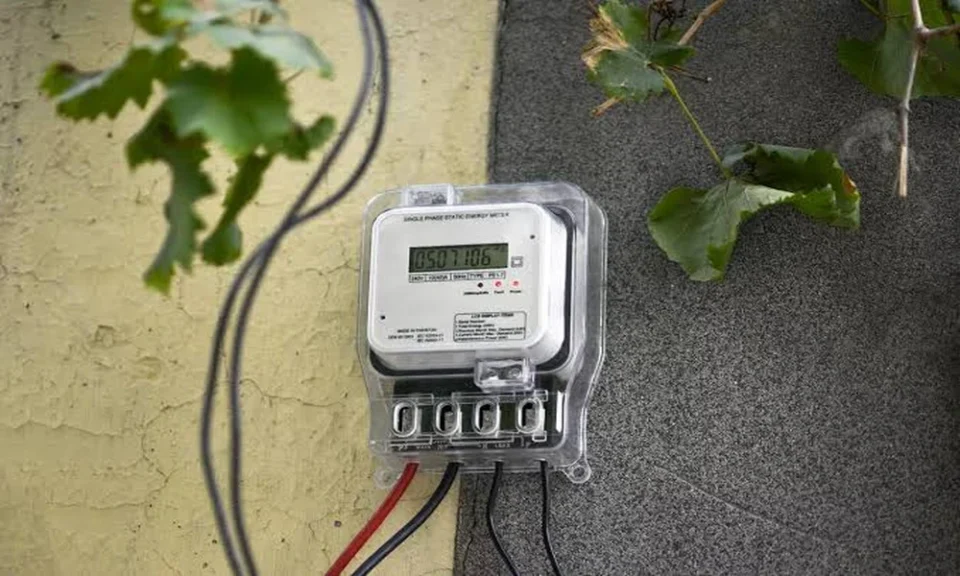
For decades, this number stayed stubbornly high. Things are changing now, and a lot of that change is riding on the back of a fairly unglamorous piece of hardware sitting outside your house: the smart energy meter. In this guide, we’ll discuss everything you need to know about how these smart meters are solving India’s AT&C loss problem.
What Exactly Is an AT&C Loss
AT&C loss isn’t just about power leaking from old wires. It’s a combination of two very different problems that somehow got bundled into one metric.
- Technical losses: Energy that dissipates as heat through transmission lines, transformers, and other equipment. Some of this is unavoidable, physics being physics.
- Commercial losses: This one’s murkier. Theft, faulty meters, billing errors, unmetered connections, and plain old non-payment all fall here.
India’s national AT&C loss figure improved from over 21% in FY 2021 to around 16% by FY 2025, according to the Ministry of Power. That’s real progress, but the country is still someway off theRevamped Distribution Sector Scheme’s target band of 12-15%. Andseveral states are still bleeding losses above 25%, with some even exceeding 35%, a gap that’s especially pronounced in hilly states like Himachal Pradesh and union territories such as Ladakh.
Where Old Meters Fall Short
Conventional electromechanical or basic digital meters were never built to fight commercial losses. They just count units. They don’t tell a utility if someone has tampered with the connection, or if the meter is stuck, or if there’s a billing mismatch three months down the line.
By the time a discom’s field staff notices something’s off, the loss has already happened. There’s no early warning system. Manual meter reading also opens the door to human error and, honestly, sometimes collusion.
How a Smart Meter Changes the Equation
A smart meter flips this whole approach. It’s not a passive counting device anymore, it’s an active data point in the grid.
Real-time visibility
Utilities can see consumption patterns as they happen instead of waiting for a monthly reading. Sudden drops or unusual spikes get flagged almost instantly, which helps catch tampering or theft far earlier than before.
Remote monitoring and control
Field visits for reading meters, cutting connections, or reconnecting them used to eat up enormous manpower and time. A smart meter allows most of this to happen remotely, cutting down both cost and the scope for manual error.
Accurate, tamper-resistant billing
Because readings are transmitted automatically, there’s less room for disputes and less opportunity for the kind of manual manipulation that used to inflate commercial losses.
Better load and outage management
Smart meters send outage alerts the moment power goes down in an area, sometimes before customers even call in a complaint. Utilities can also study load patterns to plan infrastructure upgrades where they’re actually needed, not just where it’s assumed.
Some Numbers Worth Noting
A few states that pushed early and hard on smart metering are already seeing collection efficiency improve. Delhi and Gujarat, for instance, now report single-digit AT&C losses, well below the national average of around 15%. It’s not a coincidence that these are also among the states furthest along in their metering rollouts.
That said, hardware alone won’t fix a problem this layered. Smart meters need to sit inside a larger system of billing software, field enforcement, and consumer awareness. A meter can tell a utility that theft is happening. It still takes people to act on that information.
What This Means Going Forward
The RDSS push, along with state-level initiatives, has made smart metering one of the largest infrastructure rollouts in the country’s power sector right now. Millions of connections are being converted, and the pace is only expected to pick up as utilities see the return on investment show up in their books.
For a country trying to bring AT&C losses down to global benchmark levels, smart meters aren’t a silver bullet. But they’re probably the single most useful tool discoms have had in years to actually see where the losses are coming from, instead of guessing.
Among the companies building these metering systems for Indian utilities, Genus Smart Meter solutions have been part of several state-level AMI rollouts over the past few years, working with discoms on everything from meter manufacturing to head-end system integration. If you’re a utility or a discom official trying to figure out where to start with your own metering upgrade, it’s worth having a conversation with a partner who’s already been through a few of these rollouts. You’ll save yourself a fair bit of trial and error.
