
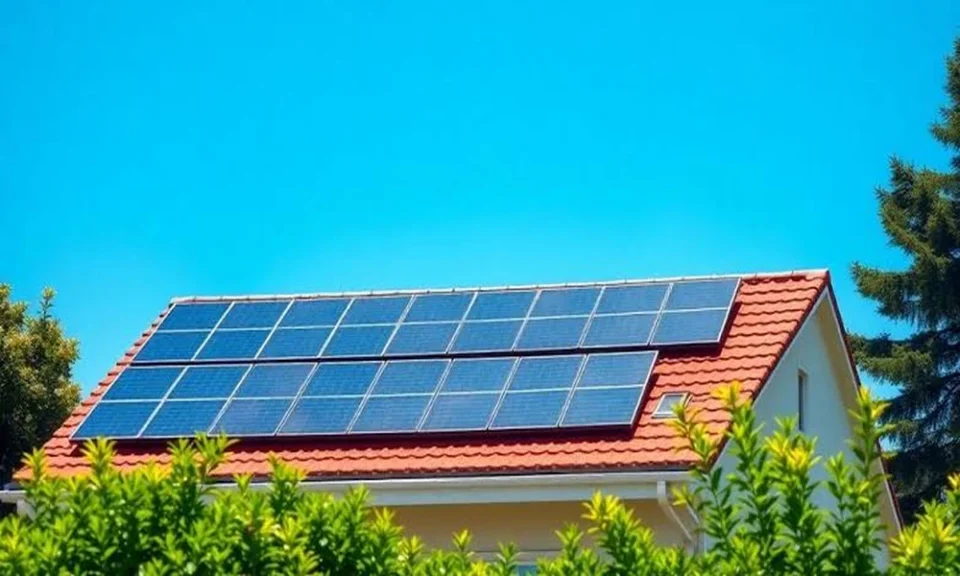
The shift towards cleaner power is accelerating across British households. Analyst Clare Casalis notes that over 1.6 million homes now utilise this technology, marking a significant move into the mainstream.
These systems can generate electricity even during the UK’s frequent gloomy days. This reliability makes them a practical consideration for many properties.
With an average installation cost of around £6,100, the financial calculation is crucial. Homeowners must analyse their specific energy use and long-term savings potential.
Organisations like Solar Energy UK provide vital feedback and data. Their insights help ensure any investment is based on solid, reliable information.
This guide explores the multifaceted advantages of modern renewable technology. It aims to help you determine if your property is suited for an upgrade that can reduce grid reliance and unlock substantial savings.
Key Takeaways
- Over 1.6 million UK properties have now adopted this clean energy technology.
- The systems are designed to produce power even in overcast conditions typical of British weather.
- The average upfront cost for a full installation is approximately £6,100.
- A detailed financial analysis is essential to see if the investment makes sense for your household.
- Trade bodies such as Solar Energy UK offer trusted guidance and viability assessments.
- Understanding your daily energy consumption is key to calculating potential savings.
- The technology offers a proven path to greater energy independence and lower bills.
Exploring Residential Solar Panel Benefits
The core advantage of this technology lies in its ability to transform a free resource into usable household current. Photovoltaic cells capture sunlight and generate clean, renewable power without releasing harmful emissions.
This process offers a direct route to greater self-sufficiency. Households can significantly cut their monthly expenditure by using less power from the national grid.
A major practical benefit is the remarkably low upkeep required. As the industry authority The Eco Experts highlights, these systems are built for longevity with few moving parts.
Once installed, they provide reliable service for many years with only routine cleaning needed.
This reliability and the promise of ongoing savings make a property more attractive to potential buyers. It’s a feature that can positively influence market value when it’s time to sell.
Furthermore, the generated electricity can run everyday appliances, from lighting to kitchen gadgets. It can even charge an electric vehicle, slashing fuel costs and reducing a home’s overall carbon footprint.
Understanding Solar Panel Technology and Installation
The journey from sunlight to powering a kettle involves a clever and reliable process. To make an informed decision, it helps to know how the technology functions and what a proper installation entails.
How Solar Panels Work
A typical UK setup has a capacity around 3.5 kilowatt-peak (kWp). This is generally enough for a household’s daily needs.
The panels themselves capture light and generate direct current (DC). An essential device called an inverter then converts this into the alternating current (AC) electricity that homes use.
Multiple panels linked together form an array, creating the complete solar panel system. For the best performance where space is limited, monocrystalline panels are often chosen for their higher efficiency.
Installation Techniques and Considerations
Correct fitting is crucial to maximise the electricity generated. In the UK, the Energy Saving Trust recommends an angle between 30° and 40°.
This optimal pitch helps the system capture the most light across the seasons. A professional installer will ensure the array is securely mounted and wired to meet all safety standards, protecting your investment and your home.
Pros of Residential Solar Panels
Households embracing this technology unlock a dual prize: financial control and environmental stewardship. The advantages move beyond the initial installation, delivering ongoing value for years.
Lower Energy Bills and Self-sufficiency
Generating your own electricity directly cuts the amount of energy purchased from the grid. This is crucial when traditional energy costs are high and volatile.
Homeowners achieve greater self-sufficiency, shielding their budgets from market fluctuations. It is a powerful step towards long-term financial security.
Environmental and Carbon Footprint Advantages
The environmental impact is equally significant. A domestic system replaces grid-supplied power, which often comes from fossil fuels.
This action directly lowers a home’s carbon footprint. Every kilowatt-hour of clean electricity produced contributes to the UK’s national net zero ambitions.
It also reduces the overall strain on the national energy infrastructure. Choosing this path supports a cleaner, more sustainable future for all.
Cons and Considerations of Solar Energy for Homes
Understanding the barriers to adoption is as crucial as appreciating the rewards of generating clean power. A successful project depends on honest assessment of a property’s specific situation.
Upfront Costs and Maintenance Issues
The most immediate hurdle is the initial investment. A typical domestic system requires an average outlay of around £6,100.
This figure can be a significant barrier for some households. Furthermore, the roof’s condition is paramount. Any existing damage must be repaired beforehand, which can add to the overall costs.
Roof Suitability and Sunlight Limitations
Not every roof is a good candidate. A north-facing surface receives very little direct sunlight, making it generally unsuitable.
Shading from trees or buildings between 10am and 4pm can severely reduce a system’s output. This limits the amount of electricity your panels produce.
Homeowners should also understand seasonal variation. Generation is naturally lower in winter, affecting annual energy savings.
Financial Implications and Savings Potential
Evaluating the financial return is a critical step for any homeowner considering a renewable energy upgrade. The initial outlay must be balanced against the promise of future bill reductions.
| Key Financial Metric | Typical Figure | Practical Implication |
|---|---|---|
| Break-even Period | At least 10 years | This is a long-term investment, not a quick way to make money. |
| Annual Bill Savings | £190 to £350 | Potential yearly reduction on energy costs with a 3.5 kWp system. |
| Optimal Usage Time | Daylight hours | Maximises savings by using your own generated electricity. |
Break-even Analysis
According to the Energy Saving Trust, reaching a break-even point typically requires a decade or more. This timeline makes the technology a commitment for the future.
If you plan to move house within this period, you may not fully recoup the upfront costs. The investment’s value should be reflected in your property’s sale price.
Tips from Frontier Energy
Frontier Energy suggests a thorough analysis of household consumption patterns. Correctly sizing the system to match real needs is crucial for an accurate payback calculation.
Shifting energy-intensive tasks, like running appliances, to daytime hours is a smart strategy. This simple change reduces the amount of electricity purchased from the grid, boosting your financial savings.
Impact on Home Value and Carbon Footprint
A home’s market appeal is increasingly tied to its operational efficiency and green credentials. Installing a clean power system addresses both areas directly.
Research by Solar Energy UK indicates such installations can lift a property’s price by an average of 2%. Other analyses, like those from The Eco Experts, suggest potential increases of up to 14%.
| Value Factor | Typical Impact | Market Influence |
|---|---|---|
| Reported Price Increase | 2% to 14% | Varies by property and local buyer demand. |
| EPC Rating Improvement | Often 1-2 bands | Makes a home more attractive to eco-conscious buyers. |
| Buyer Perception | Shifting positively | Long-term savings now often outweigh aesthetic concerns. |
Improving your Energy Performance Certificate (EPC) rating is a strategic move. It signals lower running costs and a reduced carbon footprint.
This reduction is a major environmental contribution. It helps align a household with the UK’s national net zero emissions targets.
While some buyers may initially consider the look of the panels, the promise of built-in energy solutions is winning. Homes that generate their own electricity are becoming a distinct asset in a competitive market.
Innovative Solar Battery Storage Solutions
Maximising the value of a domestic renewable system often hinges on one crucial addition: a storage unit. A solar battery captures surplus electricity produced in daylight hours for use after sunset.
This transforms a system from a daytime supplier into a round-the-clock asset. It is a fundamental upgrade for complete energy independence.
Advantages of Solar Energy Storage
Integrating battery storage allows households to capture power that would otherwise be sent to the grid. For families away during the day, this is the only effective way to utilise their generated electricity.
The Eco Experts estimate a typical home battery costs around £4,500. This investment significantly enhances the utility of existing solar panels, pushing self-sufficiency much higher.
Using stored energy at night avoids purchasing expensive grid power. This action can substantially increase annual savings.
Modern batteries are more efficient, managing home energy use across the full 24-hour cycle. As this technology evolves, battery storage is becoming standard for maximising solar energy.
Government Incentives and Smart Export Guarantee
A key policy, the Smart Export Guarantee, turns excess generation into cash. This scheme ensures homeowners get paid for surplus electricity fed back to the national grid.
It transforms a domestic PV system into a potential revenue stream. Households can offset their initial investment faster.
Smart Export Guarantee Benefits
The Smart Export Guarantee pays for each kilowatt-hour exported. Rates vary significantly between energy suppliers.
They can range from 1p to 25p per kWh. Comparing tariffs is essential to maximise income from your solar panels.
To qualify, the installation must be MCS certified. The installer also needs this accreditation.
A working smart meter is mandatory. It accurately records export data for billing by your energy company.
| Key Requirement | Specification | Purpose |
|---|---|---|
| MCS Certification | System & Installer | Ensures quality and SEG eligibility |
| Smart Meter | Fully operational | Accurate export measurement |
| Export Tariff | 1p – 25p per kWh | Determines payment rate |
By participating, you support the grid with clean energy. The Smart Export Guarantee makes your solar array more valuable.
This government incentive rewards contributions to renewable energy. It turns your PV panels into a small business.
Insights from Frontier Energy
Frontier Energy stresses shopping around for the best Smart Export Guarantee rates. They confirm that this incentive completes the economic case for solar panels.
Homeowners should ensure their system is MCS certified to access the scheme. This step secures eligibility to get paid for exported electricity.
New Build Regulations and Future Homes Standard
The government’s Future Homes Standard marks a decisive turn towards sustainable construction. Published proposals will fundamentally change how new properties are designed.
This standard aims to ensure modern dwellings are highly energy efficient from the start. The core objective is to cut household bills and bolster the nation’s overall energy security.
Solar Adoption in New Homes
A key mandate is that solar panels become a default requirement for most new build homes. This represents a major shift in UK building regulations.
The rules actively promote the integration of renewable power sources. Practical flexibility exists for properties with significant shading from trees or other buildings.
Where installation is genuinely impractical, exemptions will apply. The policy is designed to be both ambitious and sensible.
| Key Aspect | Primary Benefit | Important Note |
|---|---|---|
| PV System Integration | Lower running costs from day one | Default for most new properties |
| Energy Efficiency Focus | Enhanced national energy security | Reduces grid dependence |
| Shading Allowance | Practical flexibility | Exemption where installation is impractical |
New homeowners will gain immediate benefits. They can access clean, homegrown electricity from the very first day.
This move is part of a broader plan to deliver 1.5 million homes with modern, low-carbon heating and energy systems. The future of UK housing is being rewired for sustainability.
Expert Insights from Frontier Energy Ltd
Industry leaders like Frontier Energy Ltd provide crucial analysis on modern home energy solutions. Their guidance helps property owners understand complex technologies and make sound investments.
Industry Perspectives and Trends
Frontier Energy Ltd highlights a major shift towards integrated systems. The combination of generation, storage, and smart tariffs is now seen as the primary solution for household needs.
This approach maximises the use of self-generated electricity. It also provides greater independence from the grid.
Collaboration with Frontier Energy Ltd
Working with their experts simplifies the entire process. They offer tailored advice on installation standards and financial incentives.
This professional support ensures your setup is both compliant and highly efficient. It aligns your investment with long-term financial and environmental goals.
| Guidance Aspect | Frontier Energy Ltd Approach | Homeowner Benefit |
|---|---|---|
| Technology Selection | Analysis of the latest efficient technologies | Informed decisions for future-proof systems |
| Incentive Navigation | Clarifies complex landscape of tariffs and schemes | Maximises financial returns and eligibility |
| System Integration | Advocates for combined PV array and battery storage | Optimal management of household power |
| Compliance & Standards | Ensures MCS certification and regulation adherence | Peace of mind and protected investment |
Staying updated with such expert insights is valuable. It allows households to benefit from the most effective energy technologies available today.
Conclusion
Looking ahead, the value of generating your own power extends far beyond immediate savings. A well-planned system provides clean electricity for decades, reducing your carbon footprint and saving money over many years.
While the upfront cost is a consideration, the long-term benefits are compelling. These include lower bills and potential export payments via the Smart Export Guarantee.
Homeowners must assess their roofs for optimal sunlight exposure. This ensures their solar panels generate electricity at peak efficiency.
Integrating battery storage and smart usage maximises self-consumption. This reduces reliance on the grid. As standards evolve, such systems will become central to modern, efficient homes.
