
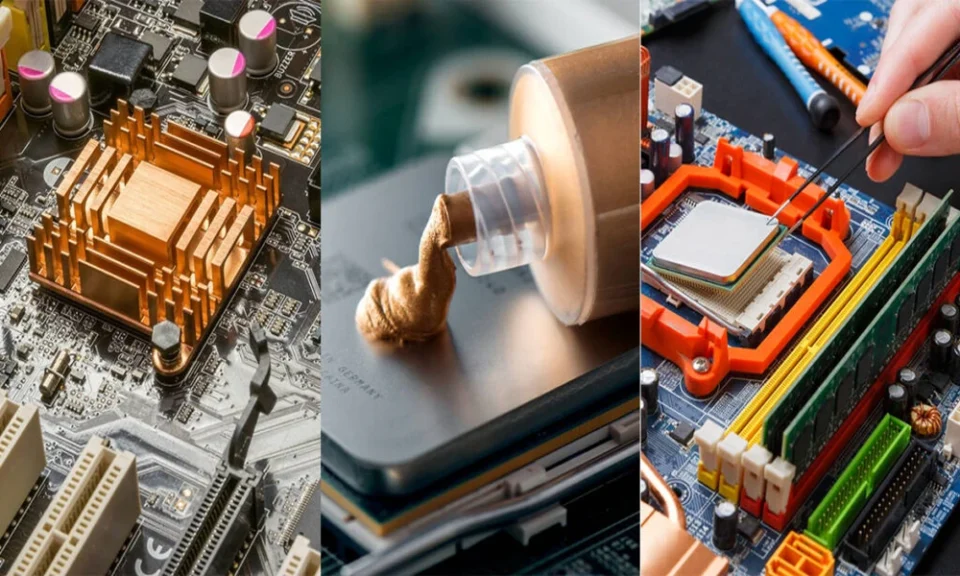
For effective thermal management in industrial electronics equipment. The best heat sink creation is crucial. However, what precisely qualifies as the “best” design for this?
Fundamentally, the ideal heat sink design effectively diverts high temperatures from vital parts. Thus, avoiding overheating guarantees steady operation.
Developers must understand a few fundamental ideas that underpin efficient design. These include selecting materials that must be of high thermal conductivity. Also, increasing surface area, along with improving airflow.
In addition to increasing chilling efficiency. A carefully considered concept prolongs the device’s lifespan. This is achieved by shielding delicate electronics, especially from temperature stress. Thanks to companies like Getec, which you can surely rely on.
In actuality, the heat sink determines how well your device works. Throttling, decreased dependability, and early failure can result from inadequate thermal transfer. On the other hand, an ideal design preserves ideal operating temperatures. Thus, improving the overall quality of the product and customer satisfaction.
Common Sources of Heat in Industrial Systems
- Electrical fluctuations in windings and conductors.
Because of electrical resistance, thermal energy is unavoidably produced when electrical power passes through windings, cables, and power components. This includes copper depletion in motor windings, which accelerates as voltage and load increase.
Magnetic losses in electromagnetic cores and devices: When magnetic fields change in motors, transformers, and inductive components, they cause eddy-current losses and hysteresis losses. These losses change into internal energy, especially in applications that involve high speeds or high frequencies.
- Mechanical friction in dynamic parts.
Bearings, seals, guides, and sliding surfaces produce warmth due to friction. In linear motor and precision motion systems, even slight friction can cause localized warmth accumulation that impacts accuracy and consistency.
- Power drive and electronics systems.
Controllers, inverters, and switching devices produce high temperatures. Especially while performing switching activities and power conversion. Elevated compact drive configurations and switching frequencies can notably elevate density within control cabinets.
- Intense load, velocity, and operational duty cycle.
Use cases with significant acceleration, ongoing movement, or substantial weights generate prolonged hotness over extended durations. Operation in continuous-duty mode allows for minimal opportunities for natural chilling, rendering warmth buildup inevitable.
- Environmental and enclosure factors.
High ambient temperatures, limited airflow, enclosed spaces, and inadequate ventilation hinder dissipation. These outside factors frequently amplify internal production, particularly within condensed industrial systems.
Check out https://energyinnovation.org/wp-content/uploads/Decarbonizing-Low-Temperature-Industrial-Heat-In-The-U.S.-Report-2.pdf to read further.
Thermal Management Techniques
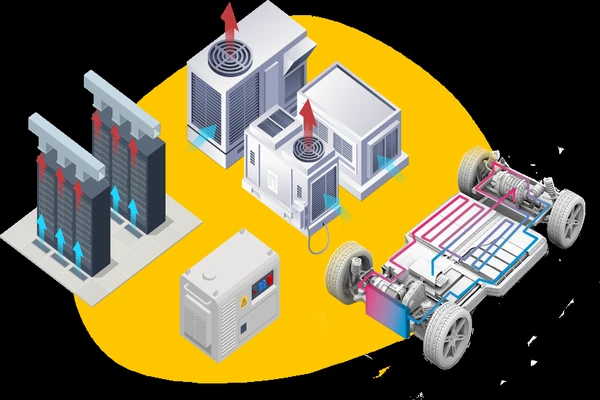
Efficient management depends on a blend of design approaches and control techniques. Also, materials that are customized for the operational conditions of every industrial system.
Instead of using just one cooling method, professionals frequently combine various techniques. This is to attain consistent and effective temperature management.
- Passive Cooling Solutions
These emphasize releasing warmth without the need for external energy. Thus, establishing a dependable and energy-saving basis for numerous industrial systems.
Heat sinks, conductive pathways, and spreaders. These are engineered to move heat away from essential components and spread it over a wider area.
The choice of materials is vital. Because copper and aluminum are frequently utilized due to their excellent conductivity. Structural layout, including enlarging surface area or refining contact interfaces. These additionally improve warmth dissipation.
Though passive hushing by itself might not meet the demands. Especially for continuous-duty or high-power applications. It establishes a reliable foundation that minimizes total thermal load. It also enhances long-term system dependability.
- Active Cooling Systems
Active cooling utilizes external sources of energy to enhance temperature removal. It’s crucial for applications that experience high power density or continuous temperature generation.
Typical active cooling methods consist of fan-driven forced liquid. Also, air cooling systems move coolant through specific pathways.
Liquid cooling, especially, provides enhanced efficiency. This is achieved by effectively moving warmth away from concentrated hotspots.
In high-precision applications. It meticulously manages airflow or fluid movement to ensure stable operating temperatures.
While active cooling raises power usage and system complexity. It allows applications to function safely and effectively in challenging situations. It’s where passive techniques are inadequate.
- Insulation and Isolation
In numerous applications, effective handling involves not just dissipating high temperatures. But it’s also directing its flow.
Thermal shields and insulation materials are employed. This is to safeguard temperature-sensitive parts from adjacent heat sources.
By separating essential components like electronics, sensors, or precise mechanical structures. Engineers can avoid undesirable disruptions and ensure consistent performance.
This method is especially crucial in compact applications. It’s where parts with significantly different needs are situated near each other.
- Smart Control and Monitoring
Contemporary management highly depends on real-time tracking and adaptive control techniques. Temperature sensors embedded in drives, motors, and mechanical structures. These offer ongoing insights into operational conditions.
This information allows control applications to modify hushing strength and manage energy output. Or initiate safety protocols when temperature limits are exceeded.
Smart management enhances system stability and avoids overheating. It enables industrial machinery to function nearer to its optimal operation thresholds. Of course, without jeopardizing safety or dependability.
Visit this website to learn more.
- System-Level Integrated Design
The most efficient solutions are realized when factors are integrated into the design. This encompasses initial assessment and modeling. Also, tight collaboration among electrical, mechanical, and control engineering groups.
Enhance component positioning, airflow routes, and hushing integration. This guarantees that high temperatures are regulated effectively across the whole system. Instead of being addressed as an afterthought.
A system-oriented strategy decreases design compromises and lowers retrofit expenses. It ensures stable performance in actual operating conditions.
